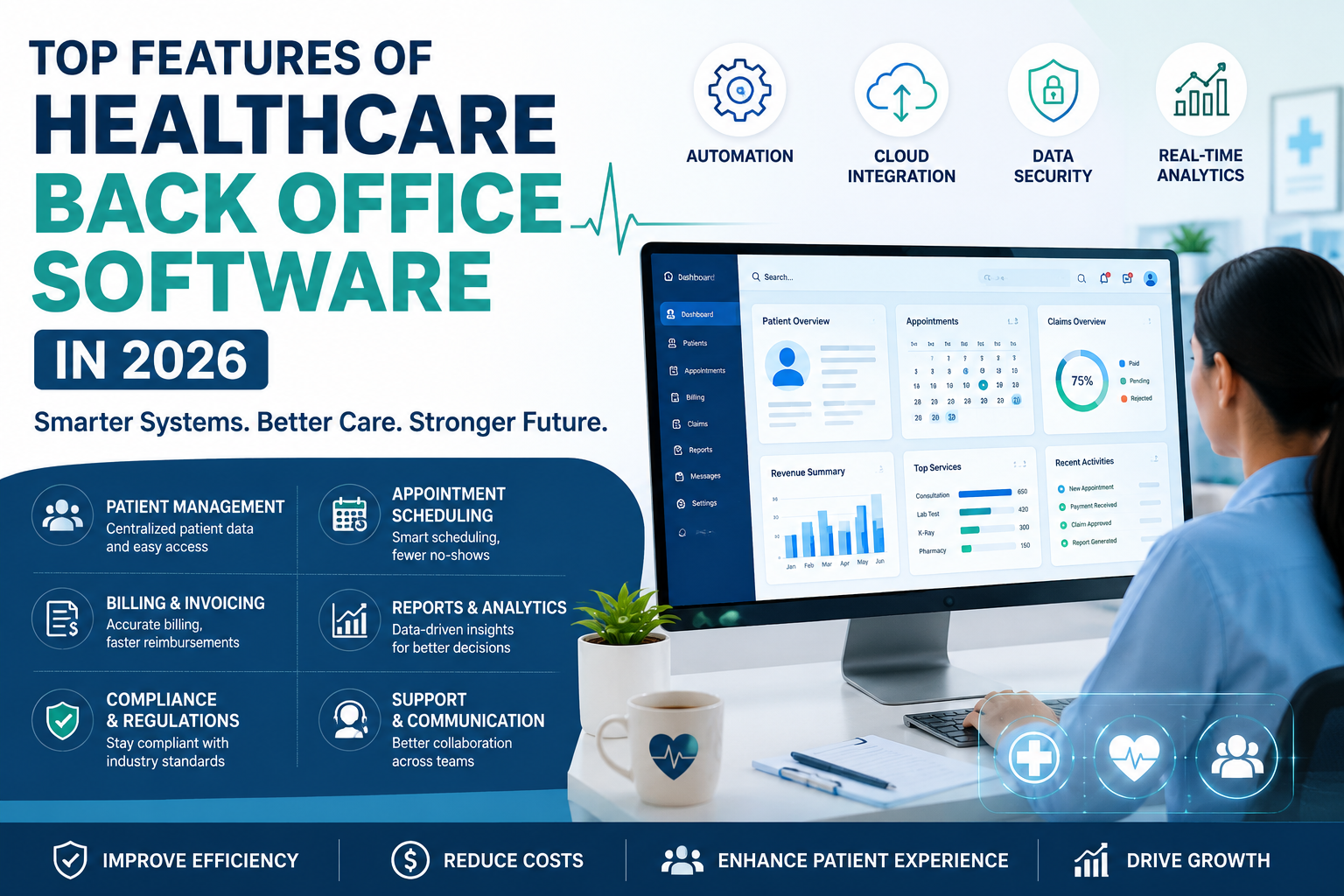
Top Features of Healthcare Back Office Software in 2026
Healthcare systems are evolving rapidly, and operational efficiency is being prioritized more than ever. As digital transformation accelerates, the role of back office software has become essential. In this context, the vital health back office concept has emerged as a critical component of modern healthcare IT. It is widely recognized that while patient care happens at the front end, the real efficiency is driven by what happens behind the scenes.
Therefore, healthcare back office software in 2026 is designed to automate, optimize, and secure administrative processes. As a result, healthcare providers are enabled to deliver faster, more accurate, and more reliable services.
What Is Healthcare Back Office Software?
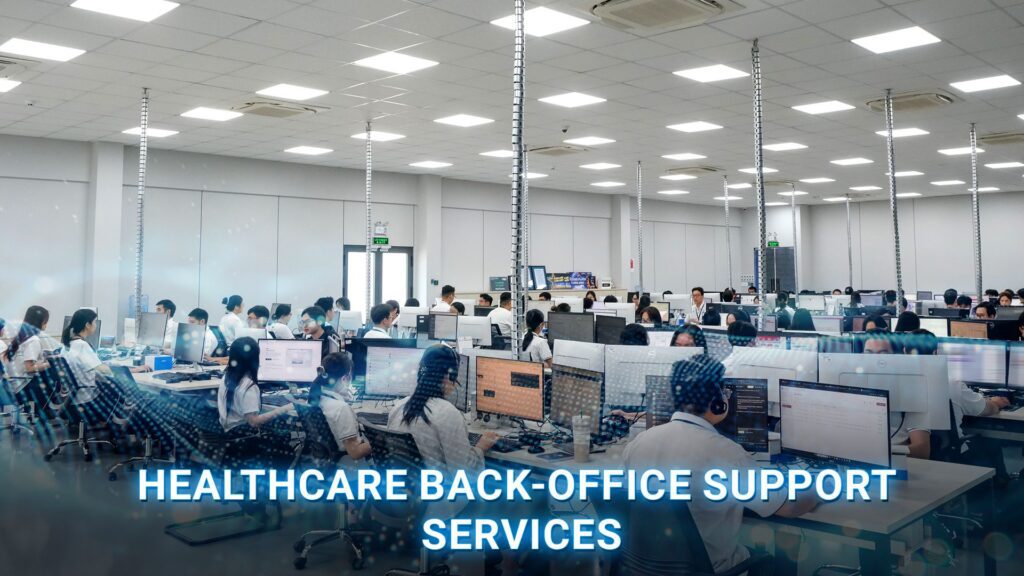
Healthcare back office software refers to digital systems that manage administrative, financial, and operational tasks. These systems are not directly visible to patients, yet they are essential for smooth healthcare delivery.
Typically, a vital health back office system handles:
- Patient data management
- Billing and claims processing
- Appointment scheduling
- Compliance and reporting
Consequently, manual processes are reduced, and efficiency is increased significantly.
Why Back Office Software Matters in 2026
In 2026, healthcare providers are dealing with large volumes of patient data and complex regulatory requirements. Therefore, traditional systems are no longer sufficient.
Back office software is important because:
- Administrative errors are minimized
- Data accuracy is improved
- Workflow efficiency is enhanced
Moreover, better coordination between departments is achieved, which leads to improved patient outcomes.
Top Features of Healthcare Back Office Software in 2026
The latest healthcare back office systems are equipped with advanced features. These features are designed to improve efficiency, reduce costs, and enhance decision-making.
1. AI-Powered Automation
Artificial Intelligence is being widely integrated into back office systems. Routine tasks such as data entry, billing, and appointment scheduling are automated.
As a result:
- Human errors are reduced
- Time is saved
- Staff productivity is increased
Additionally, AI-driven chatbots are being used to handle patient queries and administrative tasks.
2. Advanced Electronic Health Records (EHR)
Modern EHR systems are more intelligent and user-friendly. Patient data is stored securely and accessed instantly.
Key benefits include:
- Real-time updates
- Improved data accuracy
- Better coordination among healthcare providers
Thus, a vital health back office system ensures seamless data flow across departments.
3. Revenue Cycle Management (RCM) Optimization
Revenue cycle management has become more efficient with automation. Billing, coding, and insurance claims are processed faster.
Consequently:
- Payment delays are reduced
- Financial performance is improved
- Errors in billing are minimized
4. Cloud-Based Infrastructure
Cloud technology is being widely adopted in healthcare IT. Back office systems are now hosted on secure cloud platforms.
Benefits include:
- Remote access to data
- Scalability and flexibility
- Reduced infrastructure costs
Therefore, healthcare organizations can operate more efficiently without heavy hardware investments.
5. Data Security and Compliance
Data protection is a top priority in healthcare. Back office software includes advanced security measures such as encryption and multi-factor authentication.
In addition:
- Compliance with regulations is ensured
- Patient privacy is protected
- Data breaches are minimized
6. Integrated Analytics and Reporting
Data analytics tools are integrated into modern systems. These tools provide valuable insights into operations, finances, and patient trends.
As a result:
- Better decisions are made
- Performance is tracked effectively
- Future strategies are improved
7. Workflow Automation and Task Management
Tasks are automatically assigned and tracked. This ensures that nothing is missed or delayed.
Key advantages:
- Improved coordination
- Reduced workload
- Faster task completion
8. Telehealth Integration
With the rise of telehealth, back office systems now support virtual consultations. Appointment scheduling, billing, and data management are integrated seamlessly.
Consequently, patient access to healthcare is improved.
9. Interoperability and System Integration
Modern healthcare systems require integration with multiple platforms. Back office software is designed to connect with EHRs, labs, pharmacies, and insurance systems.
Thus, data is shared smoothly across different systems.
10. User-Friendly Interface
Ease of use is essential for staff efficiency. Modern systems are designed with intuitive dashboards and simple navigation.
Therefore, training time is reduced, and adoption is faster.
Case Study: Transforming Operations with Vital Health Back Office
A large healthcare clinic implemented a vital health back office system to improve its operations.
Challenges
- Manual billing errors
- Slow appointment scheduling
- Poor data management
Solution
- AI-based billing system introduced
- Cloud-based EHR implemented
- Automated scheduling tools deployed
Results (After 6 Months)
- 45% reduction in billing errors
- 35% faster appointment processing
- Improved staff productivity
This case study highlights how advanced back office features can significantly improve healthcare efficiency.
Survey Insights on Healthcare Back Office Software (2026)
A survey conducted among 120 healthcare professionals revealed important trends:
Adoption Rate
- 70% using advanced back office systems
- 20% planning upgrades
- 10% using outdated systems
Top Features Used
- 40% AI automation
- 30% cloud systems
- 20% analytics tools
- 10% telehealth integration
Key Benefits Reported
- 55% improved efficiency
- 25% better financial performance
- 20% enhanced patient experience
👉 Key Insight: AI and automation are the most valued features in modern healthcare back office systems.
Common Challenges in Implementation
Despite the benefits, certain challenges are faced:
- High initial investment
- Staff training requirements
- Integration with existing systems
However, these challenges are often overcome through proper planning and support.
Best Practices for Choosing Back Office Software
To select the right system, healthcare organizations should:
- Choose scalable solutions
- Ensure compliance with regulations
- Focus on user-friendly interfaces
- Invest in staff training
- Monitor system performance regularly
By following these practices, long-term success can be achieved.
Future Trends in Healthcare Back Office Software
The future of back office systems is being shaped by innovation.
AI Expansion
More advanced automation and predictive analytics will be introduced.
Blockchain Technology
Data security will be enhanced through decentralized systems.
Personalized Healthcare Insights
Data analytics will provide personalized treatment recommendations.
Thus, the role of the vital health back office will continue to grow in importance.
Conclusion
Healthcare back office software in 2026 is more advanced, efficient, and essential than ever before. Through AI, cloud computing, and automation, administrative processes are streamlined and optimized.
The vital health back office system plays a crucial role in ensuring that healthcare organizations operate smoothly and effectively. Although challenges exist, the benefits far outweigh the limitations.
Therefore, investing in modern back office software is a strategic decision that can transform healthcare delivery and improve overall outcomes.
References
- HealthIT.gov – Healthcare IT Systems Overview
- HIMSS – Digital Health Transformation Reports
- McKinsey & Company – Healthcare Technology Trends
- Deloitte – Future of Healthcare IT
- World Health Organization (WHO) – Digital Health Guidelines