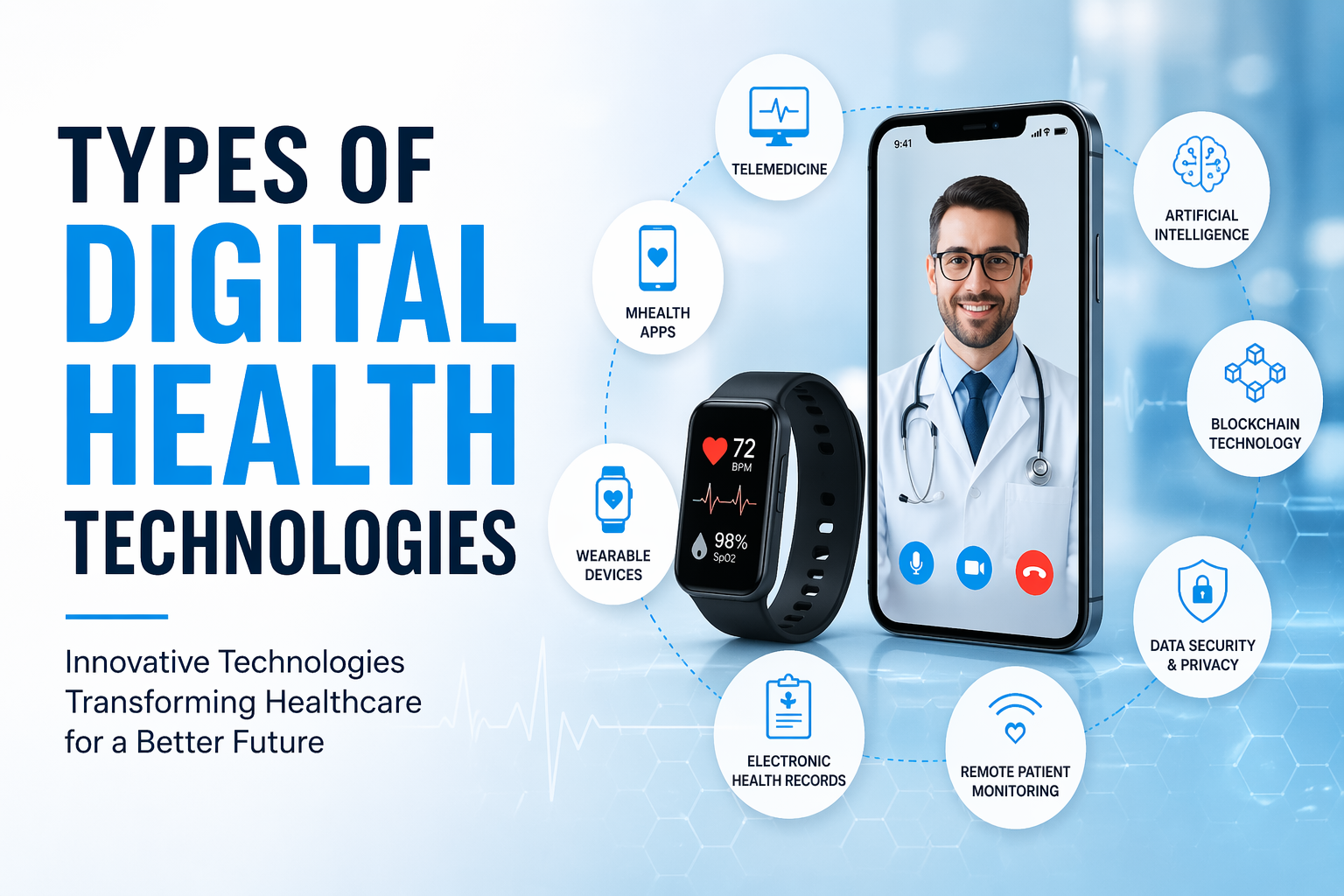
Types of digital health technologies include telemedicine, mobile health (mHealth), wearable devices, artificial intelligence (AI), electronic health records (EHR), remote patient monitoring (RPM), and blockchain in healthcare.
These technologies improve access, reduce costs, and enable real-time, data-driven healthcare.
Digital health technologies are digital tools and systems used to deliver healthcare services, monitor patients, and manage medical data. These include apps, devices, and platforms that improve diagnosis, treatment, and patient engagement.
Types of Digital Health Technologies:
- Telemedicine (virtual consultations)
- Mobile health (mHealth apps)
- Wearable health devices
- Artificial intelligence (AI) in healthcare
- Electronic health records (EHR)
- Remote patient monitoring (RPM)
- Blockchain in healthcare
| Technology | Main Function |
|---|---|
| Telemedicine | Remote doctor consultations |
| mHealth Apps | Health tracking via smartphones |
| Wearables | Real-time health monitoring |
| AI Healthcare | Diagnosis and predictions |
| EHR Systems | Digital patient records |
| RPM | Remote patient tracking |
| Blockchain | Secure data sharing |
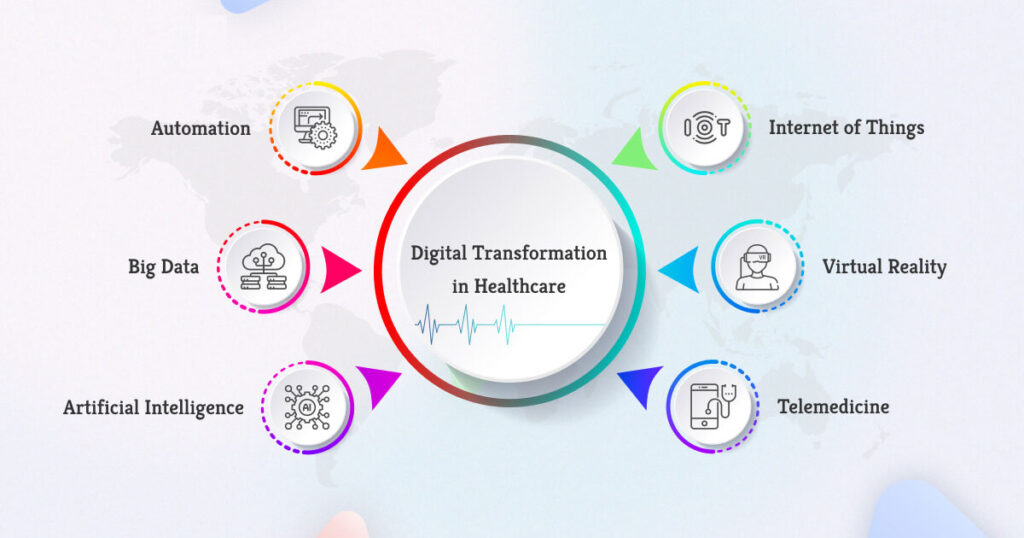
Main Types of Digital Health Technologies
1. Telemedicine (Remote Care)
Telemedicine allows virtual consultations through video calls or chat.
Use cases:
- Online doctor visits
- Remote prescriptions
- Follow-up consultations
👉 Especially useful in rural and underserved areas.
2. Mobile Health (mHealth Apps)
mHealth refers to healthcare apps on smartphones.
Examples:
- Fitness tracking apps
- Mental health apps
- Medication reminder apps
These apps empower users to manage their health daily.
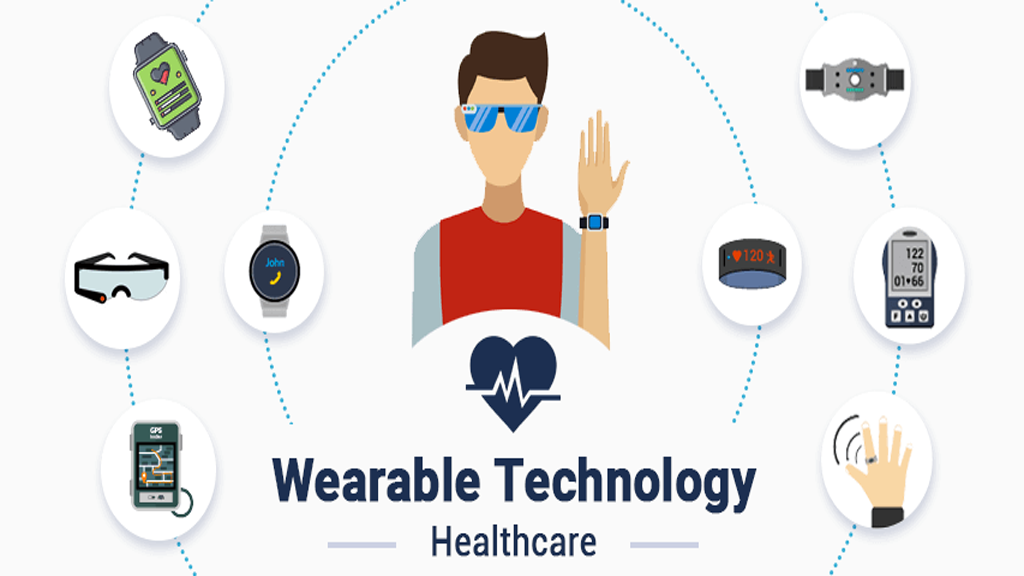
3. Wearable Health Devices
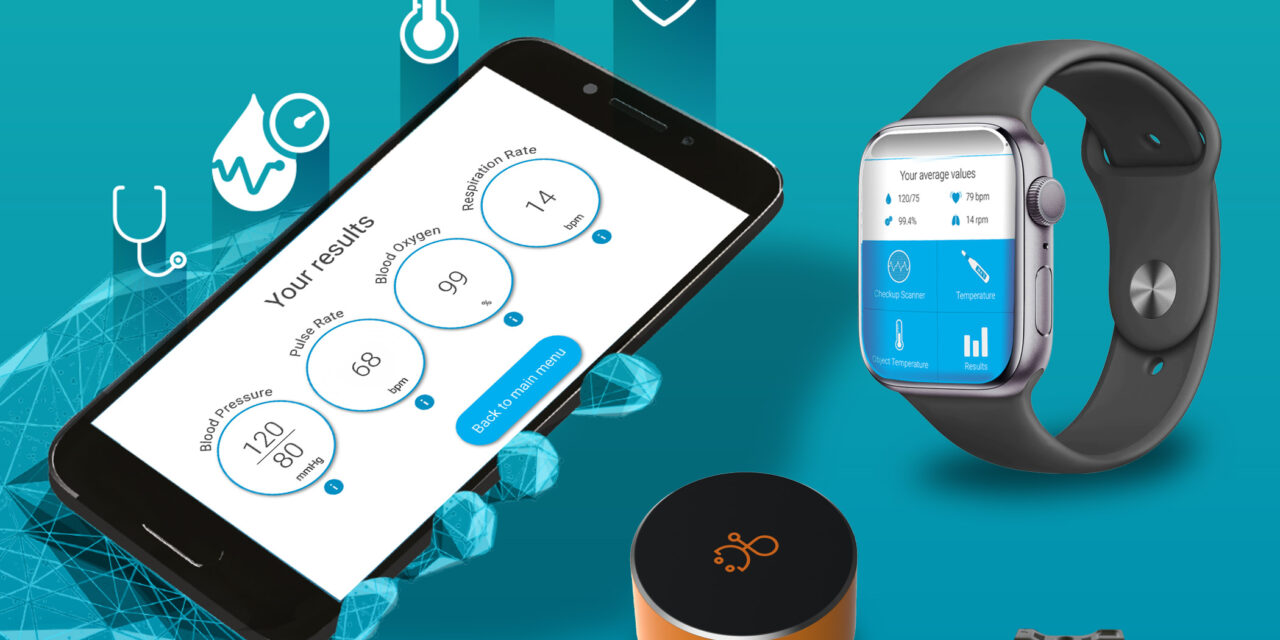
Wearables collect real-time health data.
Popular devices:
- Smartwatches
- Fitness trackers
- ECG monitors
As a result, users can detect issues early and take action.
4. Artificial Intelligence (AI) in Healthcare
AI improves diagnosis and treatment decisions.
Applications:
- Disease prediction
- Medical imaging analysis
- Virtual health assistants
Platforms like IBM Watson Health support faster clinical decisions.
5. Electronic Health Records (EHR)
EHR systems store patient data digitally.
Benefits:
- Easy access to patient history
- Better coordination among doctors
- Reduced paperwork
6. Remote Patient Monitoring (RPM)
RPM allows doctors to monitor patients remotely.
Common uses:
- Chronic disease management
- Post-surgery monitoring
Therefore, patients receive continuous care from home.
7. Blockchain in Healthcare
Blockchain secures medical data and ensures transparency.
Key advantages:
- Data security
- Fraud prevention
- Safe data sharing
How to Choose the Right Digital Health Technology
Follow these steps:
- Identify your health goal (fitness, diagnosis, chronic care)
- Select a trusted platform or device
- Check privacy and security features
- Integrate with your doctor if needed
- Track and evaluate results regularly
Best Practices for Using Digital Health Tools
- Use trusted and verified platforms
- Keep apps and devices updated
- Protect personal data with strong passwords
- Avoid self-diagnosis without medical advice
- Combine digital tools with professional care
Common Mistakes to Avoid
- Relying only on apps for medical decisions
- Ignoring data privacy risks
- Using unverified tools
- Misinterpreting health data
However, proper awareness can prevent these issues.
Real-Life Case Study
A healthcare provider partnered with Philips Healthcare to implement remote monitoring systems.
Results:
- 30% fewer hospital readmissions
- Improved patient satisfaction
- Faster emergency response
This shows how digital technologies improve healthcare outcomes.
2026 Data & Trends
According to Statista:
- 📊 70%+ healthcare providers use digital tools
- 📊 Telemedicine usage increased by 45%
- 📊 Over 1 billion wearable users globally
Therefore, digital health is rapidly becoming the standard.
FAQs
What are the types of digital health technologies?
They include telemedicine, mHealth apps, wearable devices, AI systems, EHRs, and remote monitoring tools.
What is the most popular digital health technology?
Telemedicine and wearable devices are currently the most widely used technologies.
How do digital health technologies help patients?
They provide faster access to care, real-time monitoring, and personalized treatment.
Are digital health tools reliable?
Yes, if they are approved, secure, and used alongside professional medical advice.
References
- World Health Organization
- Statista
- National Institutes of Health
- McKinsey & Company




One Comment