Introduction
Artificial Intelligence is rapidly transforming the healthcare industry. In 2026, hospitals, clinics, and wearable health companies are increasingly relying on AI-powered monitoring systems to improve patient care and detect medical emergencies earlier than ever before. As a result, real-time health tracking has become one of the most important innovations in digital healthcare.At the center of this transformation is the ability of AI to monitor the Human vital point of body continuously and accurately.
These vital points include heart rate, blood pressure, oxygen saturation, respiratory rate, body temperature, and neurological responses. Traditionally, these indicators were monitored manually by healthcare professionals. However, AI systems are now capable of analyzing these signals in real time with greater speed and precision.
Moreover, healthcare organizations are adopting predictive AI models to reduce hospital readmissions, improve patient outcomes, and enhance preventive care. Therefore, understanding how AI tracks human vital points is becoming increasingly important in modern medicine.
What Are Human Vital Points of the Body?
Before understanding AI tracking systems, the meaning of the Human vital point of body must first be clarified.
Vital points are essential physiological indicators that reflect the body’s overall condition. These measurements help doctors identify whether organs and biological systems are functioning properly.
The most commonly monitored vital points include:
- Heart rate
- Blood pressure
- Oxygen saturation (SpO2)
- Respiratory rate
- Body temperature
- Brain activity
Additionally, advanced healthcare systems now track sleep cycles, stress levels, glucose levels, and movement patterns.
Consequently, healthcare providers can obtain a complete picture of a patient’s physical condition.
How AI Monitors Human Vital Points in Real-Time Sensors
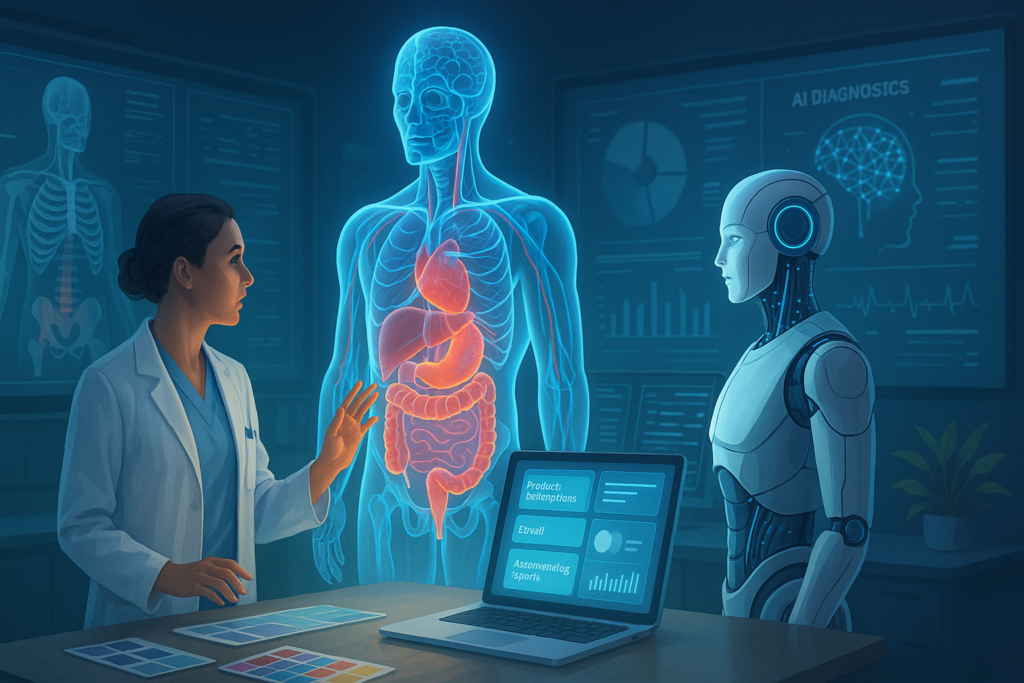
Modern healthcare systems use wearable devices equipped with smart sensors. These sensors continuously collect data from the body.
Examples include:
- Smartwatches
- ECG patches
- Fitness bands
- Implantable monitoring devices
Once data is collected, it is transmitted to cloud-based AI systems where analysis is performed instantly.
As a result, abnormalities can be detected within seconds.
Machine Learning Algorithms
Machine learning plays a critical role in healthcare monitoring. Large volumes of patient data are analyzed by AI models to identify patterns and predict medical risks.
For example:
- Irregular heart rhythms can be identified
- Sudden drops in oxygen levels can be detected
- Early signs of stroke may be predicted
Therefore, patients receive faster medical intervention.
Moreover, these systems improve continuously because they learn from historical patient data.
Computer Vision in Healthcare
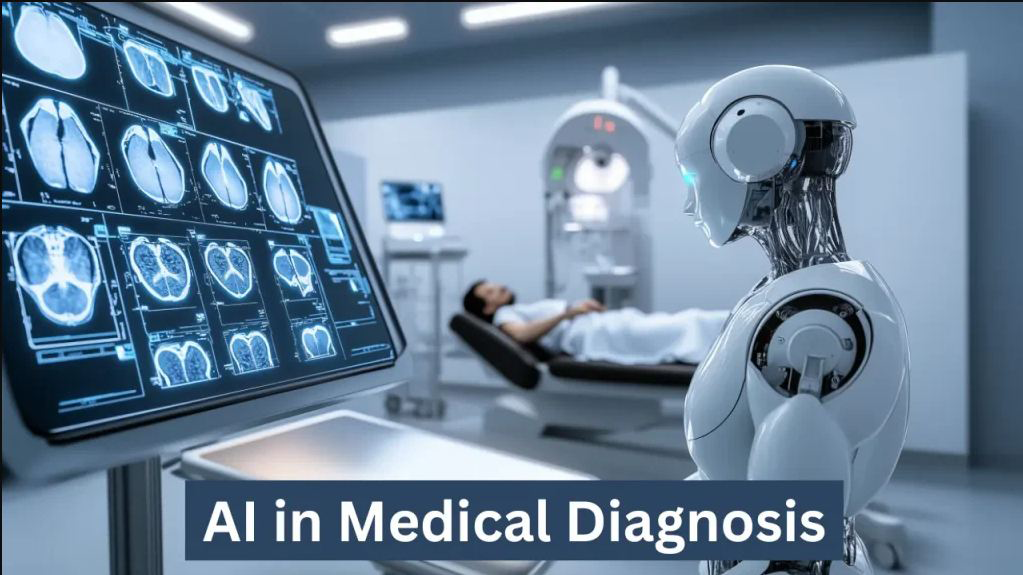
Another major advancement is computer vision technology.
AI cameras are increasingly used in hospitals to monitor:
- Facial expressions
- Eye movement
- Body posture
- Skin color changes
Consequently, healthcare professionals can identify signs of pain, fatigue, or neurological distress without invasive procedures.
Furthermore, remote patient monitoring has become more efficient through visual AI systems.
Importance of AI in Modern Healthcare Systems
Faster Emergency Detection
One of the biggest advantages of AI monitoring is speed.
Traditional monitoring often depends on periodic manual observation. However, AI systems operate continuously. Therefore, life-threatening conditions can be identified earlier.
For instance:
- Cardiac arrest risks can be detected
- Sepsis symptoms can be predicted
- Respiratory failure warnings can be generated
As a result, survival rates may improve significantly.
Reduced Workload for Medical Staff
Healthcare professionals are frequently overwhelmed with patient monitoring responsibilities.
AI systems reduce manual workload by automating repetitive monitoring tasks. Consequently, nurses and doctors can focus on treatment rather than routine observation.
Additionally, hospitals can improve operational efficiency and reduce burnout among medical staff.
Personalized Healthcare Human Vital Points
Another important benefit is personalization.
AI systems analyze individual health patterns rather than relying only on generalized medical averages. Therefore, treatment recommendations become more accurate.
For example:
- Personalized medication alerts can be generated
- Lifestyle recommendations can be adjusted
- Recovery monitoring can be customized
As a result, patient outcomes improve considerably.
Real-Life Case Study Human Vital Points
Mayo Clinic AI Monitoring Program
A notable example can be observed at the Mayo Clinic.
The organization implemented AI-assisted cardiac monitoring systems for high-risk patients. Smart monitoring devices were used to analyze heart rhythms continuously.
According to published healthcare reports, early detection rates for abnormal cardiac activity improved significantly after AI integration.
Additionally:
- Emergency response times were reduced
- Hospital readmissions decreased
- Continuous remote monitoring became more reliable
This case clearly demonstrates how AI tracking systems are reshaping modern healthcare infrastructure.
Survey: Public Trust in AI Healthcare Systems
In 2025, a healthcare technology survey conducted among 2,000 adults explored attitudes toward AI-based patient monitoring systems.
Survey Findings
| Survey Question | Positive Response |
|---|---|
| Trust AI for health monitoring | 72% |
| Prefer wearable health tracking | 68% |
| Believe AI improves emergency detection | 81% |
| Comfortable sharing health data with hospitals | 64% |
The results indicate that public confidence in AI healthcare systems is steadily increasing.
However, concerns regarding privacy and data security still remain significant.
Challenges in AI-Based Human Vital Points Monitoring
Data Privacy Concerns
Healthcare data is highly sensitive. Therefore, protecting patient information is a major challenge.
AI systems store enormous amounts of medical data. Consequently, strong cybersecurity measures must be implemented.
Additionally, healthcare organizations must comply with privacy regulations and ethical standards.
Accuracy Limitations
Although AI systems are highly advanced, errors may still occur.
For instance:
- Incorrect sensor readings may be generated
- Environmental conditions may affect results
- Biased datasets may reduce prediction accuracy
Therefore, human medical oversight remains essential.
High Implementation Costs
AI-powered healthcare infrastructure requires:
- Advanced hardware
- Cloud computing systems
- Continuous maintenance
As a result, smaller healthcare facilities may struggle to adopt these technologies initially.
Future of AI in Healthcare Monitoring
The future of healthcare monitoring appears highly promising.
By 2030, experts predict that AI systems will become deeply integrated into daily healthcare routines. Furthermore, wearable biosensors are expected to become more compact and accurate.
Future developments may include:
- Continuous blood analysis
- AI-powered robotic nurses
- Predictive disease prevention systems
- Emotion and stress detection technologies
Consequently, healthcare may become more preventive rather than reactive.
Expert Insight
Healthcare researchers increasingly emphasize that AI will not replace doctors entirely. Instead, it will enhance medical decision-making.
According to digital health experts, AI functions best when combined with human clinical expertise. Therefore, collaborative healthcare models are expected to dominate the industry in the coming years.
Additionally, researchers believe that early disease prediction through AI may significantly reduce global healthcare costs.
Conclusion
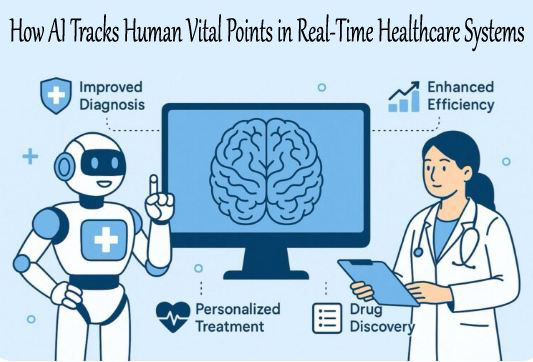
Artificial Intelligence is revolutionizing the way healthcare systems monitor the Human vital point of body in real time. Through smart sensors, machine learning algorithms, and predictive analytics, healthcare providers can detect medical risks faster and deliver more personalized treatment.
Moreover, AI-powered healthcare systems are improving emergency response, reducing hospital workload, and enhancing the efficiency of patient monitoring. Although challenges related to privacy, accuracy, and implementation costs still exist, the long-term potential remains extraordinary.
Ultimately, as AI technology continues to evolve, real-time vital point monitoring is expected to become a standard component of global healthcare systems. Therefore, the integration of AI into healthcare is not merely a technological trend—it is the future of modern medicine.
References
- World Health Organization – Digital Health and AI Healthcare Reports
- PubMed Research on AI-Based Patient Monitoring Systems
- Mayo Clinic Healthcare AI Monitoring Studies
- Journal of Medical Internet Research (JMIR)
- National Institutes of Health (NIH) AI Healthcare Publications